Showing posts with label bailouts. Show all posts

Thursday, April 7, 2011

Portugal Asks for Bail-out Which Could Cost Britain £4.4 Billion

THE DAILY TELEGRAPH: Portugal last night became the third European Union country after Greece and Ireland to formally request an emergency bail–out which could cost Britain £4.4 billion.


The country's caretaker prime minister José Sócrates said the measure had been taken after the stricken nation had run out of options.
Economists last night put the UK's involvement in a Portuguese bail–out at up to a potential £4.4billion.

After months of resisting having to apply for a bail–out from the EU and the International Monetary Fund, Portugal's cost of borrowing has reached unsustainable levels.

Addressing the nation last night Mr Sócrates, said: "I have always said that asking for aid would be the final way to go, but we have reached the moment."

It is understood that the rescue fund could be as high as £70 billion, or €80 billion.

Sources close to the Treasury said last night that Britain would take part in any Portugal–related discussions involving the EU's 27 member states. However, the type of bail–out is yet to be discussed and therefore the extent of the UK's exposure was impossible to gauge, the sources said. » | James Hall | Thursday, April 07, 2011

THE DAILY TELEGRAPH: Spain 'won't follow Portugal' with bail-out: Spain said it will not follow ailing neighbour Portugal in seeking a European bail-out. » | James Hall | Thursday, April 07, 2011

Thursday, March 24, 2011

Portugal in Crisis after Prime Minister Resigns over Austerity Measures

THE GUARDIAN: • EU bailout closer after José Sócrates loses crucial vote • Political limbo will put pressure on Portuguese bonds

Portuguese prime minister José Sócrates has said he has submitted his resignation to the president after parliament rejected his minority Socialist government's latest austerity measures.

The loss of the vote "has taken away from the government all conditions to govern," Sócrates said. It brings the country closer to needing a bailout.

Sócrates is said he tendered his resignation to President Aníbal Cavaco Silva tonight, leaving the country in a political limbo that would place further pressure on Portugal's record-level bond yields.

Sócrates had said before the vote that he would resign if the measures to cut spending and increase taxes – designed to see off a bailout similar to those taken by Greece and Ireland – were rejected.

The measures had aroused the fury of trade unions, and railway engineers walked off the job in the morning, causing widespread travel disruption. » | Giles Tremlett in Madrid | Wednesday, March 23, 2011

THE GUARDIAN: Portugal bailout 'could cost UK £3bn': Bailout request seen as 'inevitable' following prime minister's resignation in wake of failure to push through austerity measures » | Graeme Wearden | Thursday, March 24, 2011

Tuesday, January 11, 2011

Barclays Boss Bob Diamond Says Banks Should Be Allowed to Fail

THE DAILY TELEGRAPH: Bob Diamond, Barclays' chief executive, has told a committeee of MPs that badly-run banks should not be bailed out by taxpayers.


"It is not acceptable for taxpayers to bail out banks," Mr Diamond said during questioning by the Treasury Select Committee. He added that "badly managed" banks should be allowed to fail. >>> Louise Armitstead, and Amy Wilson | Tuesday, January 11, 2011

Tuesday, November 23, 2010

€90bn Irish Bailout Ends in Turmoil – Now Europe Fears Crisis Will Spread

THE GUARDIAN: Brian Cowen defies calls for resignation / Fears that Portugal and Spain may need aid / International rescue plan does little to calm markets / Datablog: how will the bailout be funded and how exposed is each economy?

Photobucket
Markets thrown into ­turmoil amid fears of a collapse in Ireland’s ­government. Photograph: The Guardian

Financial markets were thrown into turmoil today amid fears that an imminent collapse of Ireland's beleaguered government would have a knock-on effect across the eurozone.

The announcement of the potential €90bn international bailout for debt-laden Ireland – of which the UK could contribute up to £10bn – offered only a temporary respite to nervous markets.

By tonight, concerns that Portugal and even Spain might also need their own rescue packages were rising and sent the euro and shares falling while the risk of holding the debt of potentially vulnerable countries rose alarmingly.

After a tumultuous day in Dublin, where protesters tried to storm the parliament building, the prime minister, Brian Cowen, defied calls for his resignation but conceded he would call an election in the new year. The move was forced upon him after the Green party pulled out of his fragile coalition government, unnerving markets on a day which was supposed to restore confidence in Europe's decade-old single currency.

Instead there was a sense of growing unease in the markets amid evidence that investors felt Portugal would not survive without aid., Dealers said sentiment in the markets was reminiscent of the days after the collapse of Lehman Brothers in September 2008. Read on and comment >>> Jill Treanor, Nicholas Watt and Henry McDonald in Dublin | Monday, November 22, 2010

Tuesday, November 16, 2010

Europe Fears That Debt Crisis Is Ready to Spread

Photobucket
A newspaper vendor in Dublin on Monday. Photograph: The New York Times

THE NEW YORK TIMES: LONDON — European officials, increasingly concerned that the Continent’s debt crisis will spread, are warning that any new rescue plans may need to cover Portugal as well as Ireland to contain the problem they tried to resolve six months ago.

Any such plan would have to be preceded by a formal request for assistance from each country before it would be put in place. And for months now, Ireland has insisted that it has enough funds to keep it going until spring. Portugal says it, too, needs no help and emphasizes that it is in a stronger position than Ireland.

While some important details are different, the current situation feels eerily similar to what happened months ago in Greece, where the cost of borrowing rose precipitously.

European authorities stepped in with a rescue package, expecting an economic recovery and the creation of new European rescue funds to fend off future panics by bond investors whose money is needed by countries to refinance their debt.

But with economic conditions weakening, markets are once again in turmoil. Rescuing Ireland may no longer be enough.

Stronger countries and weaker countries using the common currency of the euro are being pulled in different directions.

Some economists wonder if unity will hold or if some new system that allows countries to move on one of two parallel financial tracks is needed. Read on and comment >>> Landon Thomas Jnr and James Kanter | Monday, November 15, 2010

WELT ONLINE: Deutschland wird zum Zahlmeister der Eurozone: Ein Ausstieg aus dem Euro kommt für die Kanzlerin nicht infrage. Jetzt wetten die Finanzmärkte auf eine Transferunion. Das wird teuer. >>> Autor: D. Eckert und H. Zschäpitz | Dienstag, 16. November 2010
Euro Under Siege After Portugal Hits Panic Button

Euro Under Siege After Portugal Hits Panic Button

THE DAILY TELEGRAPH: The euro is facing an unprecedented crisis after another country indicated that it was at a “high risk” of requiring an international bail-out.

Portugal became the latest European nation to suggest it was on the brink of seeking help from Brussels after Ireland confirmed it had begun preliminary talks over its debt problems.

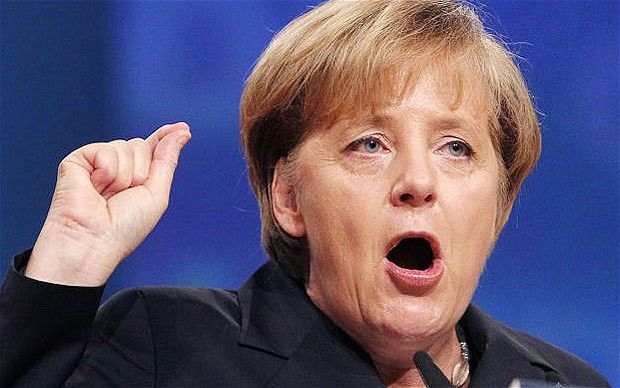
Greece also disclosed yesterday that its economic problems are even worse than previously thought. Last night, the German Chancellor Angela Merkel raised the spectre of the euro collapsing as she warned: “If the euro fails, then Europe fails.” >>> Bruno Waterfield in Brussels and Robert Winnett | Monday, November 15, 2010
Photobucket
Photobucket
Images: Google Images

Ireland Debt Crisis Worsens as Portugal Warns of Contagion Effect on Europe

THE GUARDIAN: Investors pressure Brussels for solution but Irish officials deny any need for bailout

The Irish debt crisis intensified today, after other high-deficit countries such as Portugal warned about a possible contagion effect, and investors pressured European officials to come up with a solution to calm markets. Irish officials reiterated that they don't need any bail-out.

The crisis moved from trading rooms into the political arena, as European finance ministers are meeting tomorrow and the day after in Brussels. Investors expect them to announce a resolution, or at least to shed some clarity about how much money they would lose were any European country to default.

"The Irish problem is already spreading, but it could get more violent and volatile," said Ashok Shah, chief investment officer at London Capital, a fund management firm. "They have to get this bail-out, they have a period of time before it gets impossible, before nasty things happen. The longer they leave it, the more difficult it will get."

Pressure on the EU escalated after Portugal's finance minister Fernando Teixeira dos Santos said his country was at risk of a possible contagion, as "we are not facing only a national or country problem - it is the problems of Greece, Portugal and Ireland," he said. >>> Elena Moya | Monday, November 15, 2010
Eurozone Debt Crisis: Portugal Admits 'It Could Need EU Bail-out'

THE DAILY TELEGRAPH: Portugal has admitted that it could become the latest European Union country to seek a bail-out as the eurozone debt crisis deepened.

Photobucket
Fernando Teixeira dos Santos warned that the fall out from concerns over Ireland's public finances could spread to its neighbours. Photo: The Daily Telegraph

Fernando Teixeira dos Santos, the Portuguese Finance Minister, has warned that the fall out from concerns over Ireland's public finances could create a contagion effect among its neighbours.

"The risk is high because we are not facing only a national or country problem," he told Dow Jones news wires, in reference to the possibility that Lisbon will need international financial assistance.

“It is the problems of Greece, Portugal and Ireland. This is not a problem of only this country. This has to do with the euro zone and the stability of the eurozone, and that is why contagion in this framework is more likely. >>> Andrew Hough, Bruno Waterfield in Brussels, Robert Winnett and Heidi Blake | Monday, November 15, 2010

THE SUNDAY TELEGRAPH: Europe stumbles blindly towards its 1931 moment: It is the European Central Bank that should be printing money on a mass scale to purchase government debt, not the US Federal Reserve. >>> Ambrose Evans-Pritchard | Sunday, November 14, 2010

Wednesday, October 6, 2010

Let the Banks Collapse!

THE TELEGRAPH: More taxpayer support is needed to ensure global financial stability despite the billions already pledged, the International Monetary Fund has warned, as banks remain the “achilles heel” of the economic recovery.

Lenders across Europe and the US are facing a $4 trillion refinancing hurdle in the coming 24 months and many still need to recapitalise, the Washington-based organisation said in its Global Financial Stability Report. Governments will have to inject fresh equity into banks – particularly in Spain, Germany and the US – as well as prop up their funding structures by extending emergency support.

“Progress toward global financial stability has experienced a setback since April ... [due to] the recent turmoil in sovereign debt markets,” the IMF said. “The global financial system is still in a period of significant uncertainty and remains the Achilles’ heel of the economic recovery.” Banks' $4 trillion debts are 'Achilles’ heel of the economic recovery', warns IMF >>> Philip Aldrick, Economics Editor | Tuesday, October 05, 2010

THE TELEGRAPH: Warren Buffett says in future Wall Street chiefs should go broke - and their wives: Warren Buffett, the billionaire investor, has hit out at pay practices on Wall Street, attacking the lack of reform despite two years passing since the financial crisis struck. >>> Richard Blackden, US Business Editor | Tuesday, October 05, 2010

Thursday, September 16, 2010

Banking Bailout Was Unfair, Mervyn King Tells TUC

Bank of England Governor Mervyn King said he believed it was vital the Government set out a clear plan for reducing the deficit. Photograph: The Independent

THE INDEPENDENT: The Bank of England governor Mervyn King today described the huge banking bailout as "unfair" and appeared to sympathise with calls for multibillion-pound tax evasion to be tackled when he spoke to union activists.

Mr King told the TUC Congress in Manchester that he understood the strength of feeling over the size of bankers' bonuses and said "radical reform" of the UK's financial system was needed.

The 62-year-old faced minor protests from some banner-waving delegates and a walkout by the Rail Maritime and Transport union delegation, who retreated to their exhibition stand to watch children's TV.

He was also told bluntly that bankers were "greedy bullshitters" and that he had failed in his job.

As he waited to speak, delegates called for a high pay commission to investigate the "out of control" wages of executives and other high earners.

The Communication Workers Union said a commission should examine the difference between the highest and lowest pay in leading companies.

General secretary Billy Hayes said: "The blatant double standards in pay for those at the top of companies compared to those at bottom is outrageous and leads to dissatisfaction and a divided society of haves and have-nots." >>> Alan Jones, PA | Wednesday, September 15, 2010